A timeline and commentary to stuff I find interesting.
c. 33 A.D. – The death of Jesus of Nazareth during the reign of Emperor Tiberius. Besides being a Christian, I believe there is enough evidence of his existence to be worth mentioning here. The historian and youtuber Metatron lays out a compelling argument. https://youtu.be/VrbX8DcENMg?si=YfOUc1S8wRWaKzs3
43 A.D. – The Roman Empire invades Britannia (modern day England) under Emperor Claudius. Authors Simon Scarrow has covered this well in his Eagles of the Empire series as has James Mace in Book 6 of his Artorian Chronicles. For my two cents, I prefer James Mace.
c. 60 A.D. – Boudica’s rebellion of the Iceni tribe against the Roman Empire during the reign of Emperor Nero. Simon Scarrow covers this event well.
84 A.D. – The Roman governor Agricola invades Caledonia (Scotland) and fights the Battle of Mons Graupius. James Mace features this campaign in his Artorian Dynasty series.
122 A.D. – Hadrian’s wall is built during the reign of Emperor Hadrian (of course) across southern Caledonia.
142 A.D. – The Antonine Wall is built, about a hundred miles north of Hadrian’s Wall. This wall isn’t built up nearly as much as Hadrian’s Wall, and wasn’t used by the Roman army for nearly as heavily or as long.
Late 2nd Century A.D. – timeframe for the famous Roman officer Lucius Artorius Castus. Artorius is regarded as a candidate for Arthur- though a very weak one, in my opinion. I do think there maybe be a credible link between the name Artorius and Arthur however.
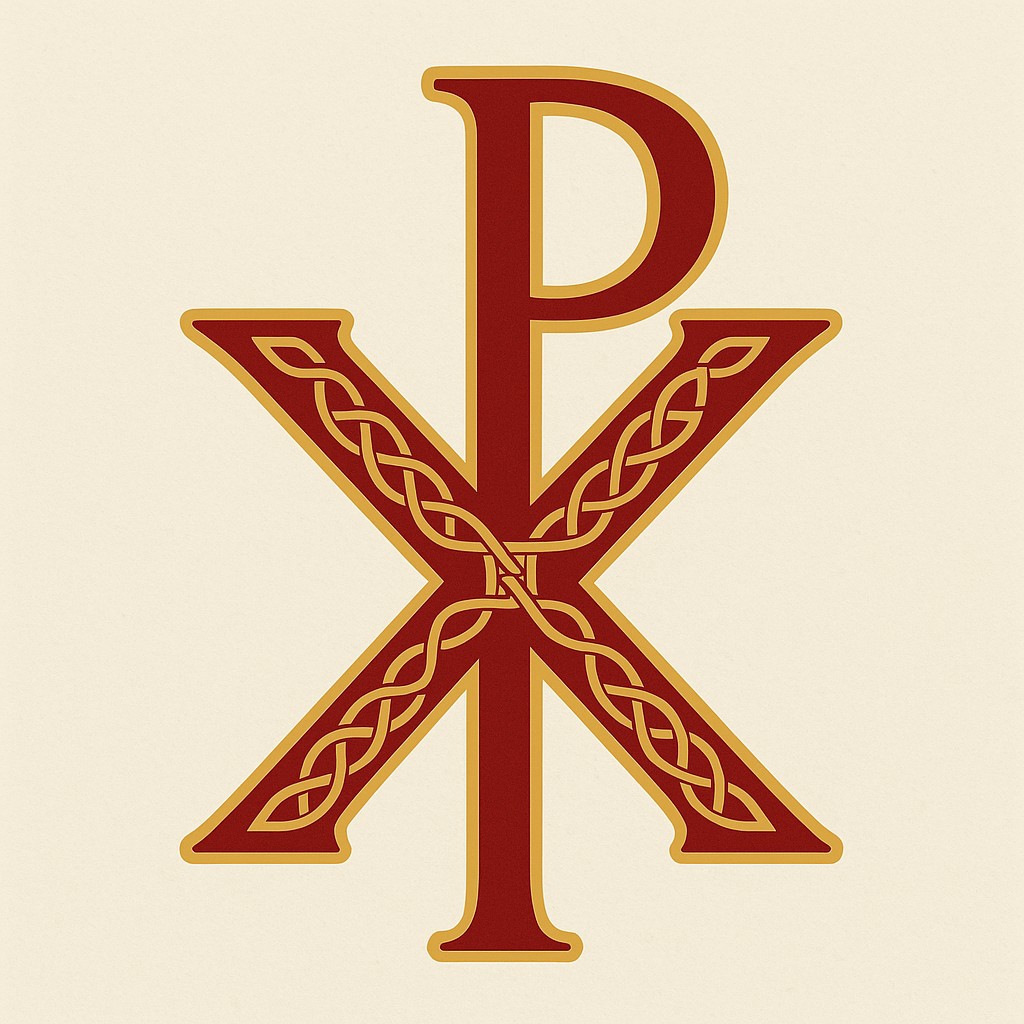
312 A.D. – Emperor Constantine converts to Christianity before fighting a decisive battle at Milvian Bridge, in Rome, in a lengthy civil war. His men begin displaying the Chi Rho on their shields and banners. This symbol becomes a prominent one within the Roman Empire for centuries.
367 A.D. – During what became known as the Great Conspiracy, a Roman garrison along Hadrian’s Wall mutinies during the reign of Western Emperor Valentinian I. About the same time, Picts from Caledonia, Scoti from Hibernia (Ireland) and Saxons from modern-day Germany and northern Europe begin invading Britain. The Germanic Franks and Saxons also invade northern Gaul (modern day France). This uprising was successfully put down.
383 A.D. – Magnus Maximus, a popular Roman general in Britain, declares himself Emperor and assembles an army pulled from Roman troops in Britain and Gaul. He successfully deposes Emperor Gratian and reigns for five years until he himself is deposed and killed by Emperor Valentinian II in 388.
c. 401 A.D. – Rome withdraws most of its troops from Hadrian’s Wall in order to defend Rome and stave off the invasions of the Visigoths and Ostrogoths (who originated from the Balkans and Eastern Germany).
407 A.D. – The Roman troops remaining in Britain at this point decide to elect their own emperor. They chose a man named Marcus, then Gratian (not the Emperor Gratian), then finally a common soldier named Constantine to lead them thanks to his name. Constantine renamed himself Flavius Claudius Constaninus/Constantine III and leads his army out of Britain, along with his oldest son (renamed Constans) to Rome. The Western and Eastern Emperors Honorius and Arcadius were in conflict with each other as well as the Visigoths under Alairic at the time. He makes himself emperor alongside his son.
409 A.D. – The Britons and inhabitants of Armorica (mostly Briton refugees, in modern-day Brittany) expel Roman administrators, having lost faith in Constantine’s ability to rule.
410 A.D. – After besieging Rome and a series of failed negotiations with Emperor Honorius, Alairac’s Visigoths sack Rome for the first time in centuries.
411 A.D. – Emperor Constantine III and his son are deposed by Honorius, the previous emperor, along with the help of a general also named Constantius, by the way.
429 A.D. – The Bishop Germanus of Auxerre visits Britain to investigate the spread of Palagianism- a “heretical” variant of Christianity that was growing popular during this period. Germanus might have made a second visit to Britain in about 447.
440 A.D. – Atilla the Hun starts causing problems for the Roman Empire.
c. 446 – 553 A.D. – The Britons regret sending the Romans away and send a letter to Roman General Flavius Aetius for aid against their numerous enemies, but Aetius is busy dealing with Atilla, and Rome has no troops to send.
c. 447 A.D. – Jute warlords Hengest & Horsa arrive to Britain, either at the invitation of a British king called Vortigern, or simply hired by him after they arrive on their own accord. Despite numerous early sources all referencing this event, historians call these two characters “semi-legendary”. The author Chris Thorndycroft has written as awesome trilogy about these two. (https://www.amazon.com/dp/B07C66BQ7B?)
453 A.D. – Atilla dies in a feast. His Huns scatter.
c. 470 A.D. – Two different historical sources reference a man called Riothamus/Riotamus/Rigotamus as a possible “King of the Britons”. Is Riothamus a title? A name? As with Vortigern, nobody really knows. There’s an argument that because both names mean something along the lines of “great king” that they are titles, rather than names. My personal opinion is that both Vortigern and Riothamus could have begun as titles, but are personal names in regards to these individuals. In any event, it’s written that Riothamus brought 12,000 men from Britain to Gaul to aid the Romans in their -losing- fight against Euric, a king of the Visigoths. Riothamus is betrayed by an ally, and his army is defeated. Riothamus is a strong candidate either for Arthur himself, or an early inspiration for the Arthurian legend. The author, Sean Poage, adheres to this theory in his own Arthurian series. For my own narrative, I’ve decided to use him in a different way…
476 A.D. – A “barbarian” former Roman general deposes the young Emperor Romulus Agustulus and made himself king, not emperor. This is popularly considered the end of Western Roman Empire, and in my opinion anyway, the beginning of the Dark Age period.
Early 6th century – First referenced by Gildas, and then pretty much every source after him, most historians seem to agree that there was probably a battle at Badon Hill/Mount Badon sometime between about 490 – 517 A.D. Unfortunately there’s no tangible evidence for where this battle may have occurred however, or who actually fought at it.
Early 6th century – Gildas, a British monk believed to have lived in northwest England writes his semi-historical sermon, On the Conquest and Ruin of Britain. In it, he references the names of several British kings of his day, mostly in the context of chastising them for various sins, but also mentions the battle of Badon Hill. Gildas also mentions a man named Ambrosius Aurelianus and credits him as being a central figure in the fight against the Saxons.
536 A.D. – Europe experiences an extreme weather anomaly, believed to be the result of a volcanic eruption, though scientists are unsure which one. Scribes all throughout Europe and even the Middle East recorded the event however, describing what nearly sounds like an eclipse, but one that lasted all summer, and caused a severe winter. Another eruption may have occurred between 540 – 547. It has been speculated that this event is what kickstarted a century-long ice age. This weather phenomenon is attributed to widespread famine as a result of the disruption of agriculture. The famine in turn led to plague and caused millions of deaths.
c. 731 A.D. – A (likely) Anglo-Saxon monk named Bede who probably lived in northeastern England, writes another religious, semi-historical account of Britain called the Ecclesiastical History of the English People. He pretty much corroborates a lot of what Gildas wrote, but fleshes out additional details on characters like Vortigern, Hengest & Horsa, and Ambrosius Aurelianus.
768 – 814 A.D. – Reign of Charlemagne, King of the Franks and Emperor of the Carolingian Empire (Basically modern France & Germany).
c. 828 A.D. – Nennius, believed to have been a Welsh monk, is credited as the author of the History of the Britons. This manuscript is significant in that it expands even more on Vortigern and others mentioned particularly by Bede, but this is also the first written account of Arthur, and connects him to the Battle of Badon Hill.
871 – 886 A.D. – Reign of Alfred the Great, king of the Anglo-Saxons in England. Between this guy and Charlemagne, this is where I personally mark the end of the “Dark Age” and the beginning of the Medieval Period.
Late 9th Century– Alfred the Great has a record of England’s history, The Anglo-Saxon Chronicle, written down. This document mentions Hengest & Horsa several times, as well as Vortigern. There’s even a reference to a duel fought between Horsa and Catigern in one battle that is also mentioned in detail by Nennius. Curiously, it leaves out Ambrosius Aurelianus, Badon Hill, and Arthur.
1066 A.D. – The Normans, led by, William the Conqueror defeats the Anglo-Saxons at the Battle of Hastings and conquer England.
1096 – 99 A.D. – The First Crusade.
c. 1136 A.D. – A Welsh cleric, Geoffrey of Monmouth writes the most significant Arthurian text to date: The History of the Kings of Britain. Mostly regarded as fiction, only a relatively small portion of this manuscript is actually about Arthur. Geoffrey clearly takes inspiration from what Gildas, Bede, and Nennius wrote, but he crafted a full narrative around Arthur, and “modernizes” him for 12th century readers. Geoffrey is the reason “normies” now all think of “King” Arthur as a medieval English king. Geoffrey’s story of Arthur became an international best seller of his day, and immediately inspired writers all over Europe to begin adding to the tale. Without Geoffrey’s writing, it’s very likely Arthur would have remained an obscure, Welsh legend.
1147 – 49 A.D. – The Second Crusade.
1155 A.D. – Robert Wace, a Norman poet, writes Roman de Brut. This is a loosely historical account of Britain’s history from ancient times up to the 8th century and includes tales of Arthur. Specifically, it’s Wace who introduces the famous Round Table to Arthurian legend. Wace’s success inspired a wave of later French poets to write their own Arthurian tales.
c. 1180 A.D. – French writer and poet Chrétien de Troyes writes a collection of “Romances” that add characters such as Lancelot, Guinevere and their love triangle with Arthur, and elements such as the Holy Grail and the Lady of the Lake to Arthurian lore. He also fleshes out (though does not invent) the characters of Yvain/Gawain and Percival, originally known as Peredur. We can also thank him for the insertion of the fabled Camelot into the Arthurian legend.
1189 – 92 A.D. – The Third Crusade.
c. 1190 – 1210 A.D. – Robert de Boron, yet another French writer, adds to Arthurian legend. Specifically, his stories are believed to the be the origin of Mordred being the incestuous son of Arthur and Morgause (or Morgana), in contrast with Geoffrey of Monmouth’s work, which depicted Mordred as simply Arthur’s nephew.
1485 A.D. – Sir Thomas Malory writes the definitive Arthurian manuscript, The Death of Arthur. This story combines, condenses, and organizes all the previous mainstream stories about King Arthur. It’s this work that most movies and TV shows draw the most inspiration from, not to mention most books that have been written about King Arthur from that point to present day.
 Kyle's Chronicle
Leave a comment